

Skip hire in Bearsden
- 01Choose a sizeCompare approximate capacities
- 02Check the accessPlan the route and placement
- 03Request a quoteTell NSH about your project
Start here
Start with the project and the available space
A kitchen refit, garage clear-out or garden project is easier to plan when you know what needs to leave the property. Make a short list of the materials and larger items, then consider how you will carry them to the skip. This gives you a useful starting point for comparing sizes and discussing your request with NSH.
Check the entrance as well as the space beyond it. The council’s January 2021 Old Bearsden appraisal describes garden boundaries with walls, hedges, gate piers and mature trees. For a property with these features, note narrow openings and overhanging branches before choosing a position. A large garden does not by itself establish that a delivery vehicle can reach the space.
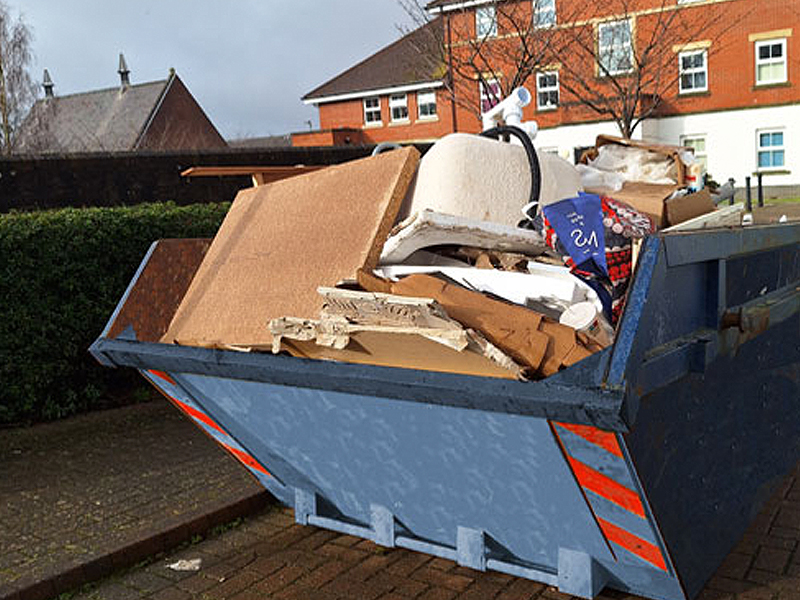
- 01
Home improvements
Identify what each stage of the work will remove, including old fittings, packaging and other project waste.
- 02
Property clear-outs
Count bulky items separately from smaller loose material so you can describe the job clearly.
- 03
Garden and trade projects
Explain the materials involved and flag dense or unusual waste before deciding which size to book.
Skip sizes
Compare the four skip sizes
Use these project examples and approximate capacities to compare the options. A 4-yard skip is the smallest listed choice, followed by 6, 8 and 14-yard skips. The guide helps you prepare a more specific enquiry without having to guess from a photograph.
Volume is only part of the decision. The materials, the loading rules and the delivery position also matter, so check the arrangement for your particular waste with NSH before booking.
- 4yard
4-yard skip
About 40 bin bagsApproximate capacity
A compact option for builders and household projects such as garage clearances, carpets, furniture and smaller electrical items. It is also listed for soil, turf and rubble.
Suitable for
- General waste
- Garage clearances
- Brick rubble
- Mattresses
- Soil and turf
- Garden waste
- 6yard
6-yard skip
About 60 bin bagsApproximate capacity
A practical mid-sized option for builders and household projects, including kitchen and bathroom refits, smaller electrical items and house or garage clearances.
Suitable for
- General waste
- House clearances
- Kitchen renovation waste
- Bathroom renovation waste
- Garden waste
- 8yard
8-yard skip
About 80 bin bagsApproximate capacity
A larger option for builders and household projects such as kitchen refits, house extensions, garden projects and shop-fitting work.
Suitable for
- General waste
- House clearances
- Bulky waste
- Kitchen refit waste
- Garden waste
- Packaging
- 14yard
14-yard skip
About 140 bin bagsApproximate capacity
The largest listed option, intended for trade and domestic projects such as kitchen refits, house extensions, large garden projects and shop-fitting work.
Suitable for
- General waste
- Timber and flooring
- Bulky waste
- Packaging
- Garden waste
- Commercial waste
Bin-bag figures are approximate.
Access and placement
Check access from the street to the skip
Trace the approach to your property before agreeing where the skip should go. The council’s January 2021 appraisal identifies east-west and north-south routes meeting at Bearsden Cross. If your approach uses these routes, describe the final turn and entrance to NSH, including anything that could obstruct the vehicle. Check the conditions at your own property rather than assuming every street or driveway offers the same access.
Look for tight corners, parked vehicles, overhead cables and low branches. Consider where people will walk while the skip is in use and whether neighbours share any part of the route. Explain restrictions when you enquire so the proposed position can be discussed before booking.

- 01
Show the approach
Describe how the vehicle would reach the entrance and point out any tight turn or obstacle.
- 02
Consider everyone using the space
Keep entrances, pedestrian routes and shared access in mind when choosing the position.
- 03
Report changes
Tell NSH if building work, scaffolding, parked vehicles or another obstruction changes the access arrangements.
Waste details
Allow time for a road permit
East Dunbartonshire Council requires a permit for a skip placed on a road. Its published conditions require applications at least seven days before the proposed occupation and ask for a plan or sketch of the position. Establish the permit arrangements before settling project dates.
Read the council’s skip-permit guidance for current conditions and charges. The council distinguishes driveway placement from road placement. If the boundary or road status is unclear, check the proposed position with the council. Confirm separately with NSH what needs to be in place for your booking.

- 01
Identify the position
Be clear whether you are proposing a driveway, another private space or part of the road.
- 02
Check the council requirements
Review the proposed location, application timing and conditions before agreeing the booking.
- 03
Keep the details together
Retain the relevant permit information with your project notes and confirm any conditions that affect placement.
Before delivery
Describe the waste before you book
Give NSH a material list rather than relying only on a phrase such as house clearance or renovation waste. Mention large items separately and explain any materials you are unsure about. The size examples above are a guide to comparison; confirm the relevant loading instructions and any restrictions for your own job.
For business or trade work, the Scottish Government’s controlled-waste guidance covers accurate descriptions and transfer information. Householders can consult its separate guidance on safe storage and using an appropriately registered transporter. Keep waste contained while you arrange its removal and clarify uncertain items before putting them in a skip.

- 01
Keep uncertain items aside
Keep items you are unsure about aside until you have confirmed the arrangement.
- 02
Prepare for collection
Maintain access around the skip and contact NSH if your project or the waste changes.
- 03
Keep useful records
Business customers should check the information and records required for their waste transfer.
Useful guidance
Useful guidance for planning your booking
Use the council’s permit information for road placement and the Scottish Government’s guidance for waste responsibilities. SEPA provides a route to public authorisation records through its waste-transport guidance. These sources can help you check the relevant requirements while you organise your project.
For the skip itself, give NSH your Bearsden location, a description of the waste and details of the space you have in mind. Include your preferred dates as part of the enquiry so the team can discuss the request and quote with you.
- 01
Household waste guidance
Read the Scottish Government’s householder guidance for storage and waste-transfer responsibilities.

Business waste guidance
Check the waste-producer guidance for descriptions and transfer information.

Waste-transporter information
Use SEPA’s waste-transport guidance to find its public-register route.
Common questions
Your Bearsden skip hire questions
Check the practical details before you book, then call NSH if your job, waste or access needs a more specific answer.
Which skip sizes does NSH offer in Bearsden?
How much do the skips hold?
What if I need the skip on the road?
What should I check at the property?
Can I put every item from my project in a skip?
How do I find out the price and available dates?

Ready to discuss your job?